The 10 Best Texas Parks for Hiking, Paddling and Stars

“Best” depends on the trip you want: a steep summit hike, a quiet paddle, a swim in spring-fed water, or a night under dark skies. Texas parks vary just as much in scenery and visitor facilities, so a famous name isn’t automatically the best fit for your weekend. The state park system grew from a small group of properties into a broad network shaped by conservation, historic preservation, and public access to very different natural areas, as Texas Parks and Wildlife Department’s account of the state park system explains.
This guide groups ten parks by what you can do there, with practical notes on heat, crowds, water, and access. For trip planning, the independent TX State Parks field guide covers 93 parks so far and groups them into seven TPWD regions. Each park page puts cost, swimming, dogs, camping, and estimated drive time near the top, with links to official sources and the date each fact was last checked. Use those details to narrow your options, then confirm current alerts, rules, and availability with TPWD before you leave.
Table of Contents
- 1. Big Bend Ranch State Park
- 2. Enchanted Rock State Natural Area
- 3. Palo Duro Canyon State Park
- 4. Pedernales Falls State Park
- 5. Lost Maples State Natural Area
- 6. Garner State Park
- 7. Balmorhea State Park
- 8. Caddo Lake State Park
- 9. Galveston Island State Park
- 10. Inks Lake State Park
- The 10 Best Texas Parks at a Glance
- Pick Your Park and Plan the Trip Before You Drive
1. Big Bend Ranch State Park
Big Bend Ranch suits hikers who want a remote desert trip more than a convenient day outing. Its appeal is the combination of rugged canyon country, volcanic terrain, and Rio Grande scenery. The trade-off is the amount of planning it takes to reach and explore the park. Don’t treat it like a quick stop between errands: route, fuel, water, and road conditions all matter.
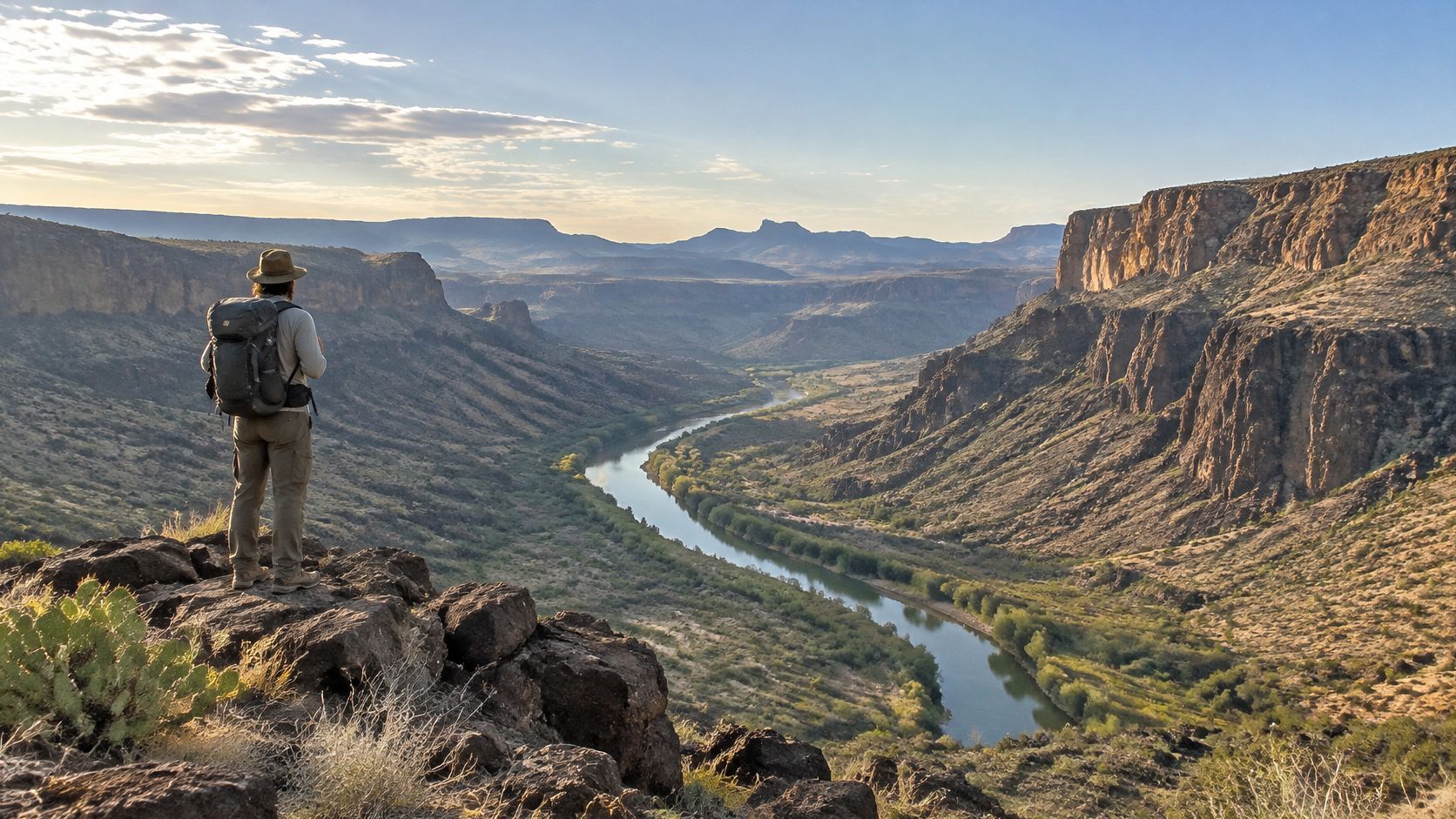
Make the logistics part of the hike
Before you go, check current road conditions, especially if your route includes rough backcountry roads. Fill your tank and buy food and supplies in a nearby town before entering the park. Carry more water than you expect to need, and choose a route that fits your group’s experience and the day’s conditions. Hiking is generally more comfortable in cooler seasons than under the hard heat of a summer afternoon.
For a typical visit, plan a full day around one manageable route rather than stringing together several ambitious hikes. A group arriving from out of town should also decide in advance whether the goal is a day hike, primitive camping, or just a scenic drive. Those plans call for different supplies and time buffers. For other remote destinations in the region, see this guide to West Texas state parks.
Big Bend Ranch is a strong pick for solitude and dramatic desert scenery, but it’s a poor choice for travelers who need frequent services or want flexible, low-effort access. Check the park’s current notices before setting out, and don’t assume phone service will be available along a backcountry route.
2. Enchanted Rock State Natural Area
For a classic summit hike, Enchanted Rock is the Central Texas choice. The main draw is the exposed pink granite dome and the view from its summit, but the climb is steep and offers little protection from direct sun. Start early, bring water, and wear shoes that grip rock well. The Summit Trail is steep and 0.8 mile long, so treat the short distance as a climb, not a casual stroll.
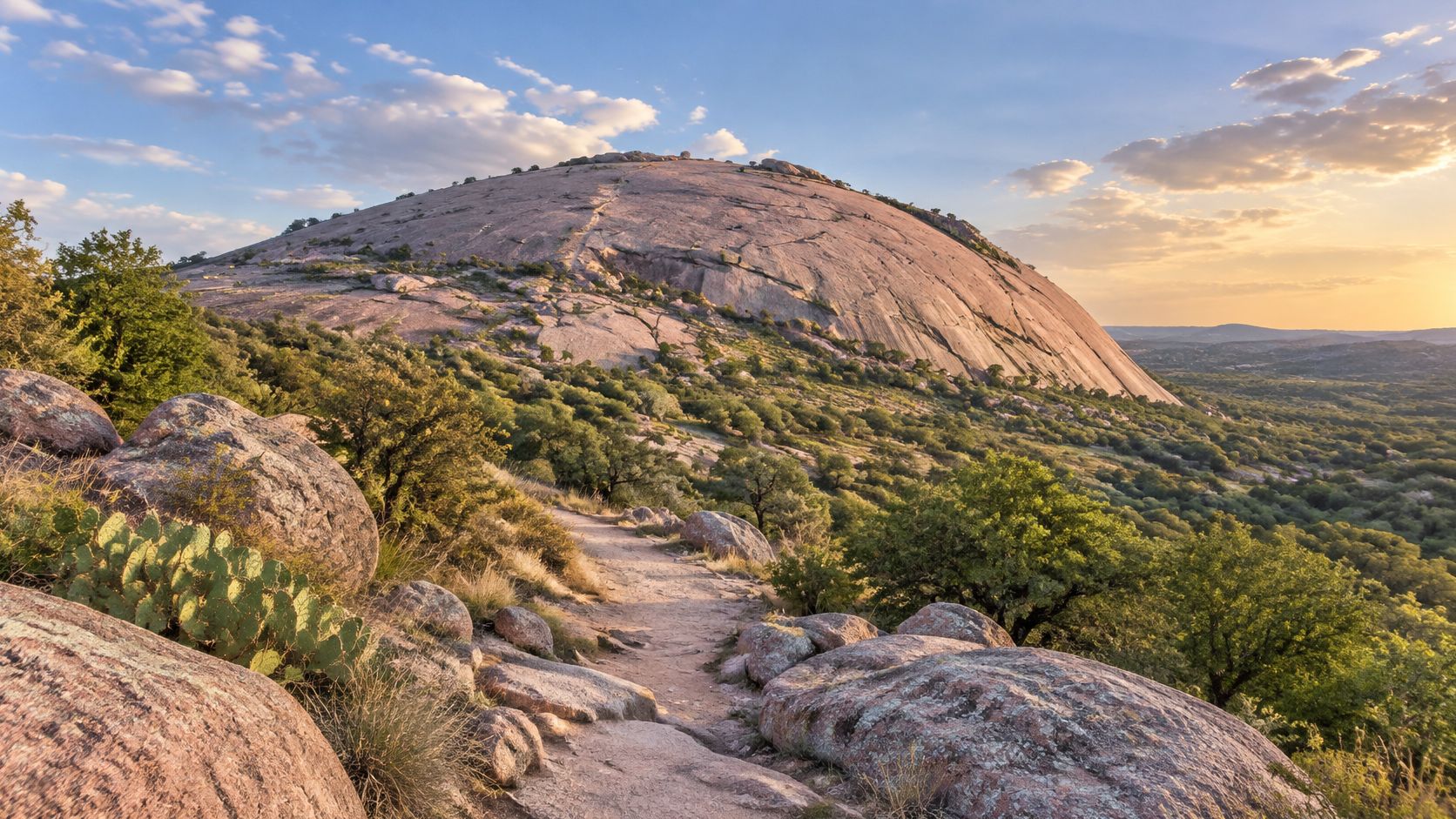
Aim for early light or evening sky
A family visiting for the day can make the summit the main event, then explore a shorter walk if time and energy allow. Avoid starting the climb at the hottest part of the day, especially with children or anyone who struggles in heat. If the group wants stargazing, plan around access hours and current park rules rather than assuming you can arrive after dark.
Enchanted Rock is popular, so spontaneous weekend plans can fail if day-use access is already full. TPWD says some popular parks fill months ahead and recommends reserving day passes, especially for weekends and holidays. Its reservation system allows day passes to be reserved up to a month ahead, while most overnight reservations open further in advance, as explained on the Texas State Parks reservations page.
This park works best when you plan the visit around the climb and arrive with the right footwear, water, and entry reservation. It’s less suitable for visitors looking for shaded trails, easy terrain, or a swim.
3. Palo Duro Canyon State Park
Palo Duro Canyon is the pick for canyon scenery in the Panhandle. Layered rock, broad views, and the Lighthouse formation give the park a distinctive setting, while the scenic drive offers a way to appreciate the canyon without committing to a long hike. That flexibility matters for families or mixed-ability groups: one person can take a trail, while another enjoys the views from the car and overlooks.
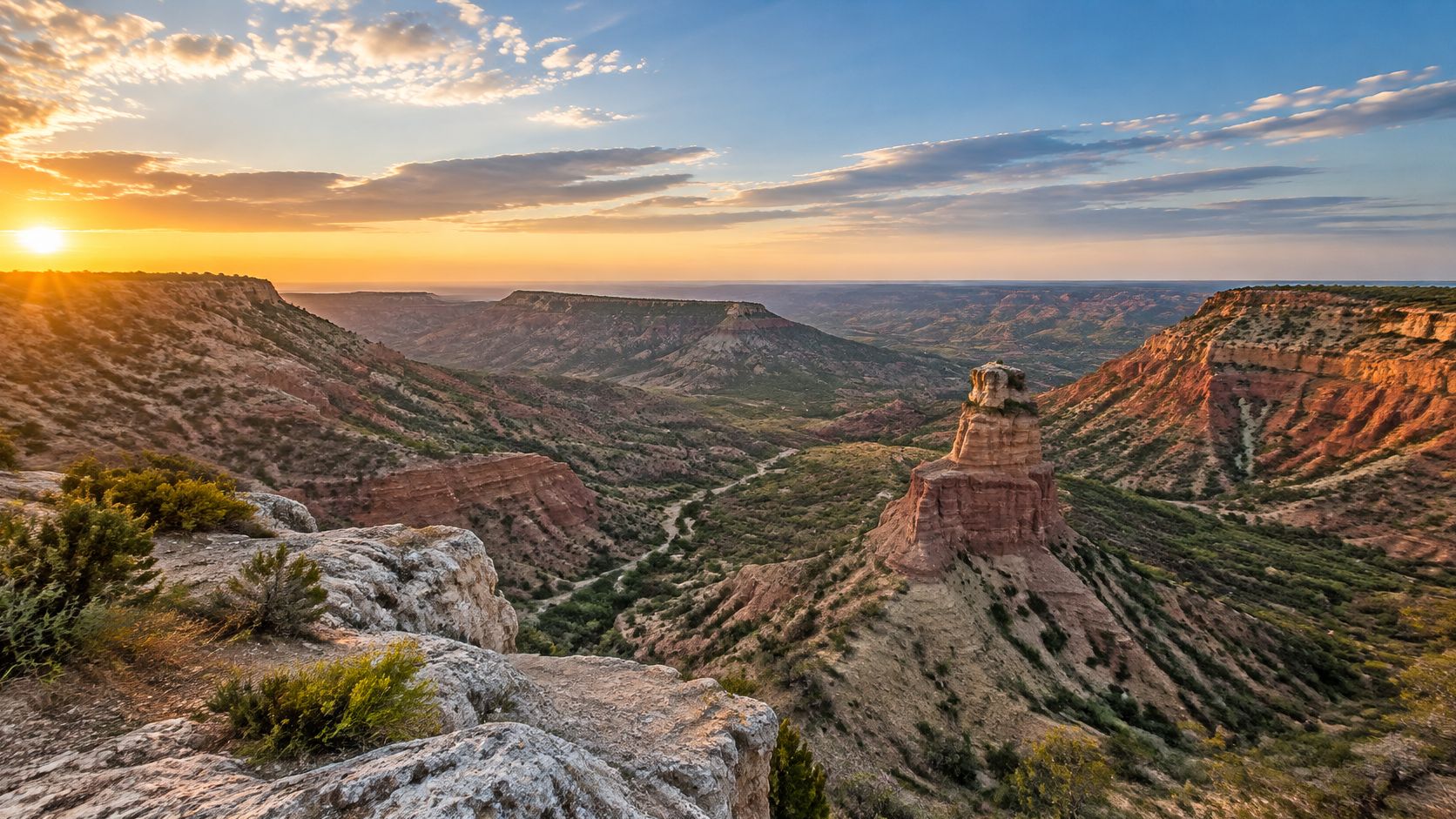
Match the route to the weather
Canyon hikes require more care than the scenery may suggest. Check trail conditions before leaving, carry plenty of water, and choose a route based on the heat and your group’s ability. Spring and fall are often more comfortable times for hiking than peak summer. If your main goal is the view, use the scenic drive rather than trying to squeeze a long exposed hike into the hottest part of the day.
The Texas Outdoor Musical is another reason visitors plan trips here. If you want to attend, check the schedule and arrange tickets ahead instead of treating the performance as an unplanned add-on. That works well for a weekend based around one evening show and a daytime drive or hike.
Palo Duro is a strong option for travelers who want dramatic scenery with more than one way to experience it. It’s not the best pick for someone who wants a shady, water-focused outing. For a straightforward visit, choose one main activity, bring food and water, and leave enough time to travel around the canyon rather than rushing from viewpoint to viewpoint.
4. Pedernales Falls State Park
Pedernales Falls is a Hill Country river park where broad limestone shelves and stepped falls make the water’s condition central to the visit. The same river that looks calm and inviting at one level can become dangerous when it’s running fast. Check current water conditions and advisories before you go, and stay away from swift water and the falls during high flow.
Don’t confuse a river visit with a guaranteed swim
For a typical day trip from the Austin area, arrive early on a weekend and bring water shoes for slick rock. If conditions are calm and swimming is allowed, choose a suitable area away from fast-moving water. If the river is high, make the visit about walking, scenery, or a different activity instead. Never assume that a photograph of a tranquil pool reflects the conditions on your day.
The park also works for visitors who want to mix a walk with a riverside break. Keep the route and the water stop separate in your planning: trail conditions, heat, and river flow can affect each part of the day differently. A short hike in hot weather may still require more water and care than the distance suggests.
The guide lists an entrance fee of $6 per adult, with children 12 and under free, and says swimming is allowed at the park. Those details are useful for comparison, but always verify current fees and swimming access on the official Pedernales Falls park page before leaving. The falls are a good choice for a flexible outing, not a promise of safe swimming in every condition.
5. Lost Maples State Natural Area
Lost Maples is the seasonal choice for fall color and shaded canyon walks. Bigtooth maples draw visitors when their leaves turn, but a peak-color outing is less spontaneous than an ordinary trail day. Check TPWD’s foliage updates before you commit, and expect more people when the colors are at their best. For an overview of what to watch for, use this guide to Lost Maples fall foliage.
Time the visit around the leaves
A couple planning an autumn weekend can make the park the centerpiece of a short trip, but should reserve camping or lodging well ahead and consider a weekday visit. Peak color varies, so arriving on a fixed date without checking conditions can mean missing the display. Rocky trails also call for sturdy footwear, even if the walk looks gentle on a map.
The park’s appeal isn’t limited to foliage. River trails, cool canyons, and wooded scenery offer reasons to visit outside the most popular color period. That’s the better approach if you want a quieter hike and don’t need a particular leaf display. Choose a route that matches your group’s abilities, and leave time to enjoy the shaded sections rather than treating the trail as a race.
Lost Maples works best for hikers who can be flexible about timing and who understand that seasonal popularity changes the feel of the visit. It’s less suitable for travelers who expect guaranteed fall color or easy last-minute camping. Check park conditions before driving out, especially if your trip depends on foliage or an overnight stay.
6. Garner State Park
Garner is a summer favorite for river swimming, tubing, and family camping. Its Frio River setting makes water the main event, while the park’s Civilian Conservation Corps stonework adds a historic layer to a trip that might otherwise be all about cooling off. In 2023, Garner recorded 475,898 visitors, the highest attendance among Texas state parks that year, according to TPWD visitor figures reported by the Austin American-Statesman.
Plan for crowds as carefully as the river
If your group wants a summer weekend, reserve a campsite or cabin well ahead rather than assuming you’ll find a spot on arrival. A weekday or shoulder-season visit can offer a calmer alternative. Check river conditions before tubing, and bring water shoes for rocky areas. Pack food and supplies, too, since nearby options can be limited.
For a family trip, make a simple plan: check in, choose a suitable place to swim, and leave time to explore the park’s built features or take a short walk. Don’t try to force a long hike into a hot day that’s already centered on the river. Keep children close around water, and follow the park’s current swimming guidance.
Garner is a strong match for visitors who want an energetic, social river day and are willing to plan around demand. It’s a weaker fit for travelers seeking solitude or a last-minute summer campsite. The best experience comes from treating reservations and water conditions as part of the trip, not details to sort out after you arrive.
7. Balmorhea State Park
Balmorhea is the desert swimming choice. The spring-fed pool offers a rare contrast to the dry surroundings, drawing swimmers, divers, and visitors who want a cool-water break. For a family driving through West Texas, it can turn a hot travel day into a swim-focused stop. Check pool hours and swimming rules before setting out, since access details shape the whole plan.
Keep the swim and the desert outing distinct
Bring sun protection and drinking water even if the pool is the main activity. The water may feel refreshing, but the surrounding climate still calls for shade and hydration. In summer, consider arriving in the morning; for a hike, cooler weather is more comfortable. Plan fuel and food stops in nearby towns before reaching the park rather than relying on last-minute options.
Balmorhea works best when visitors make the pool the central reason for the trip. Don’t assume that because the water is cool, the rest of the day will be comfortable outdoors. If your group includes people who aren’t swimming, plan a shorter visit or a second activity that suits them, and confirm what’s currently open before making the drive.
The main trade-off is distance and desert exposure. Travelers who are already in the region may find the pool a rewarding stop, while those making a long detour should check access and hours carefully first. Treat it as a destination with its own logistics, not just a roadside dip.
8. Caddo Lake State Park
Caddo Lake offers a different kind of Texas water trip: paddling through cypress-lined waterways instead of swimming beside open shoreline. Canoes and kayaks let visitors explore the lake’s winding channels, where Spanish moss and swamp scenery create a slower, quieter outing. If you’re new to this kind of navigation, consider a guided paddle rather than trying to interpret every turn on your own.
Choose a route that fits your paddling skills
A first-time visitor can plan a short paddle and leave time for breaks, rather than setting off on an ambitious route without knowing the conditions. Check water levels before you go, dress for humidity, and bring insect repellent. Spring and fall can make for more comfortable paddling than a hot, humid day. If you don’t have experience in swamp waterways, guidance can make the trip easier to manage.
For camping details and ideas for an overnight visit, see this guide to Caddo Lake camping.
Caddo Lake is best for travelers who want a paddle with distinctive scenery, not a fast-paced day of swimming and beach activities. Keep the plan flexible: water conditions, weather, and your group’s comfort with navigation should determine how far you go. A shorter route can be more enjoyable than pushing through when heat or insects become distracting.
9. Galveston Island State Park
Galveston Island State Park combines Gulf shoreline, bayside wetlands, and coastal trails. That mix makes it useful for a beach visit with a birding or wildlife-watching option, especially if some members of the group would rather walk than swim. Spring and fall migration can be good times to focus on birds, but weather and coastal conditions should drive the final plan.
Check the coast before you leave
Before a beach day, review weather and hurricane advisories, along with current swimming information. Bring sun protection, drinking water, and insect repellent. A coastal trail can feel very different from an exposed beach, so choose your activity based on the day’s conditions rather than assuming the whole park offers the same comfort.
For example, a family could start with a bayside walk, then decide whether the beach is suitable once they’ve checked current conditions. If swimming advisories or weather make the water a poor option, the wetlands and trails can still shape a worthwhile visit. Keep an eye on children near water and follow posted notices.
Galveston Island is a practical pick for visitors who want coastal scenery and more than one way to spend the day. It’s not a park to visit on autopilot: conditions can change, and a beach plan needs a weather check. Build in flexibility, especially if you’re traveling with a fixed schedule or a group with mixed interests.
10. Inks Lake State Park
Inks Lake is a flexible Hill Country option for swimming, boating, and enjoying granite scenery. It works for a day out or a weekend, but the experience depends on lake conditions and access to the water. Check lake levels and boat ramp status before packing equipment, and reserve a campsite early for a weekend or holiday.
Make the lake the plan, not an assumption
A group with a boat can build the day around getting on the water, while visitors without equipment can check local rental options before leaving home. If swimming is the priority, confirm current access and conditions first. For a quieter outing, consider a weekday or a spring or fall visit instead of the busiest warm-weather dates.
Inks Lake also suits visitors who want to combine water time with a walk among the park’s granite features. Keep the schedule loose enough to adjust if the lake or ramp isn’t in the condition you expected. Bring sun protection and drinking water, and don’t count on every activity being equally appealing in midday heat.
The park’s strength is choice: visitors can make a trip around boating, swimming, or a more relaxed lakeside visit. That flexibility is useful for families, but it still pays to check access before driving. A simple pre-visit call to the official park information can prevent a long trip built around an unavailable boat ramp or changed swimming conditions.
The 10 Best Texas Parks at a Glance
| Park | Region | Best for | Swimming | Camping |
|---|---|---|---|---|
| Big Bend Ranch State Park | West Texas, Chihuahuan Desert | Remote backcountry hikes and stargazing | River access; swimming not highlighted | Primitive and developed campsites |
| Enchanted Rock State Natural Area | Hill Country near Fredericksburg | Granite summit hikes and stargazing | Not highlighted | Campsites and group facilities |
| Palo Duro Canyon State Park | Texas Panhandle near Canyon | Canyon scenery, hiking, and biking | Not highlighted | Campgrounds and cabins |
| Pedernales Falls State Park | Hill Country near Austin | River scenery, hiking, and seasonal wildflowers | Calm pools when conditions allow | Camping facilities |
| Lost Maples State Natural Area | Edwards Plateau near Utopia | Autumn foliage and shaded canyon trails | River access; swimming not highlighted | Campsites and cabins |
| Garner State Park | Hill Country near Concan | Family river swimming and tubing | Popular river swimming and tubing | Campgrounds and cabins |
| Balmorhea State Park | West Texas, Chihuahuan Desert | Spring-fed swimming and desert scenery | Large, clear spring-fed pool | Camping and cabins |
| Caddo Lake State Park | East Texas near the Louisiana border | Swamp paddling and birdwatching | Not highlighted | Camping and cabins |
| Galveston Island State Park | Gulf Coast, Galveston Island | Beach visits and coastal birding | Gulf beach; check current advisories | Camping facilities |
| Inks Lake State Park | Highland Lakes, near Burnet | Lake recreation and granite scenery | Lake swimming | Camping and cabins |
Pick Your Park and Plan the Trip Before You Drive
The best park is the one that suits your activity, the season, and the amount of travel you’re willing to do. Choose Enchanted Rock for a granite summit, Caddo Lake for a cypress-swamp paddle, or Big Bend Ranch for remote desert terrain and dark skies. For a family swim, compare river and lake conditions at Garner, Inks Lake, Pedernales Falls, or Balmorhea rather than assuming every water stop will be safe or open when you arrive.
Heat and access can change the best choice. A steep, exposed hike may be a poor fit on a hot day, while a river park may be unsuitable when water is moving fast. TPWD reported 192 heat-related illnesses across 44 state parks in the previous year, including incidents involving pets, and advises visitors to carry enough water, use a buddy system, and check site-specific notices. Its heat-safety guidance for park visitors is worth reviewing before a strenuous outing, especially if you’re hiking with children, older adults, or dogs.
Before booking, confirm current fees, pet rules, swimming access, trail conditions, and alerts on the official TPWD park page. The independent TX State Parks field guide consolidates practical details such as fees, pet policies, swimming, camping, and estimated drive times, with links to the official sources and a last-checked date. Drive-time estimates don’t include traffic, so allow extra time for weekend travel and remote routes.
Reserve campsites and day passes through the official Texas State Parks reservation site, not through the guide. Popular parks can fill well ahead, and a reservation can matter as much as choosing the right trail. If your dates are fixed, check availability before you settle on a park. If your schedule is flexible, consider a less crowded alternative with the activity you want, then verify its current conditions before setting out.
Use TX State Parks to compare Texas parks by activity, region, fees, swimming access, camping, pet rules, and estimated drive times. Pick a park that fits your plans, then confirm current alerts and availability with TPWD before you go.
Fees, hours and rules change. Check the park's official TPWD page before you go.